|
(29/07/2011)
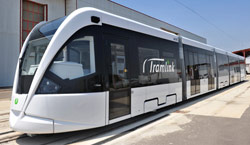
Vossloh Tramlink is 100% low floor and modular, which allows for different configurations ranging between 21 and 57 m in length. The vehicle presented in Valencia is 32 m long, with a capacity for 236 passengers -54 seated and 182 standing- and able to reach a maximum speed of 70 km/h.
Tramlink complies with the current energy saving and efficiency requirements and it gives special consideration to reducing its impact on the environment. It also provides a high level of comfort and is accessible to people with reduced mobility.
The Tramlink platform is the result of the research carried out by the team at the Vossloh factory in Albuixech, which has meant an investment of 15 million euros in the years 2009-2012 and has had the collaboration of the Instituto de Biomecánica de Valencia (Biomechanics Institute of Valencia) and the Universidad Politécnica de Valencia (Technical University of Valencia).
Rostock
The first 13 Tramlink units will be supplied to the German operator RSAG in the German city of Rostock. Their composition is 5 cars resting on three bogies, with a car body width of 2.65 m and a length of 32 m.
Trams will run above surface and in tunnel. They will incorporate ultracapacitors mounted on the roof of the vehicle, which will allow energy generated from braking to be stored in order to reuse it in the vehicle’s acceleration, heating or air conditioning, thus reducing energy consumption.
|